

24 February 2026
Fueling Tamariki and Rangatahi for Success with Milk and Weet Bix™
Starting the day with a good kai makes a big difference. A bowl of Weet‑Bix™ with milk can help set tamariki and rangatahi up for the day. As part of a healthy diet, they provide nutrients like calcium to support bone strength, protein for muscle growth, fibre for healthy digestion and iron for everyday learning!
We asked a couple of experts at Fonterra and Sanitarium to share with us around what makes a great breakfast?
Charlotte Coltart, Senior Dietitian NZRD, Sanitarium, shares “Breakfast doesn’t need to look the same every day, or the same for every person. But by following the below steps you can ensure that you’re fuelling your body each day with a nutritious, balanced brekkie"
- Start with some wholegrains – this could be Weet-Bix™, brown bread, rolled oats, millet porridge, brown rice congee, or your favourite wholegrain muesli.
- Add in a source of protein like milk, yoghurt, baked beans, dal (lentils), eggs, nuts, seeds or nut butter.
- Include a serve of fruit, either fresh, frozen or tinned (preferably in fruit juice or no added sugar).
- And if possible, add in some veggies, like a handful of spinach in your smoothie, some mushrooms in your omelette or tomato on your toast.
Jeremy Hill, Chief Science and Technology officer of Fonterra adds … “we're often told that breakfast is the most important meal of the day but there’s research to prove it. For example, a study of over 28,000 school children* found that those children that skipped breakfast performed poorly in tests including arithmetic and reading."
Why are Weet-Bix and milk a great breakfast combo?
Charlotte shares “Weet-Bix™ is a great tasting, nutritious and affordable wholegrain breakfast cereal that’s been enjoyed by Kiwi families for generations. It’s low in sugar, high in iron, a source of fibre and a good source of B vitamins."
“Milk is the perfect partner at breakfast”, shares Jeremy. “Bringing protein and calcium plus a wide range of other essential nutrients to help fuel growing bodies, energise active minds, and keep tamariki fuller for longer.”

What’s important about the role of calcium and building strong bones?
- Childhood and adolescence are the prime years to build bone mineral density. Calcium supports normal development and maintenance of bones and teeth.
- Adding 1 cup of milk to your breakfast can add at least 360 mg of calcium
What about protein for growing muscles?
- Protein supports muscle and body development and helps fill hungry puku.
- The Ministry of Health recommends 2–3 servings of milk & dairy and 1–2 servings of other protein sources daily. Including protein at breakfast helps keep kids satisfied and ready to learn.
Tell us more about the benefit of wholegrains and fibre?
- Wholegrains are an important part of a healthy diet and are packed with nutrients that help you to feel great. That’s because wholegrain foods contain all three layers of the grain, just as nature intended, and provide a range of essential nutrients, like vitamins B1, B2, B3, folate and iron.
- Wholegrain breakfast cereals like Weet-Bix™ also provide a source of fibre, which is important for supporting healthy digestion as part of a balanced diet.
- Did you know that 2 Weet‑Bix™ provides ~3.0 g fibre. To boost the overall fibre content, some schools like to add fruit (like fresh banana, tinned or frozen fruit) to lift the fibre even more.
Easy ideas to try at your next KickStart Breakfast club (or at home!)
- Classic bowl: Weet‑Bix™, milk and sliced banana then add some crunch - sprinkle a spoonful of nuts and/or seeds for extra protein, fibre and texture.
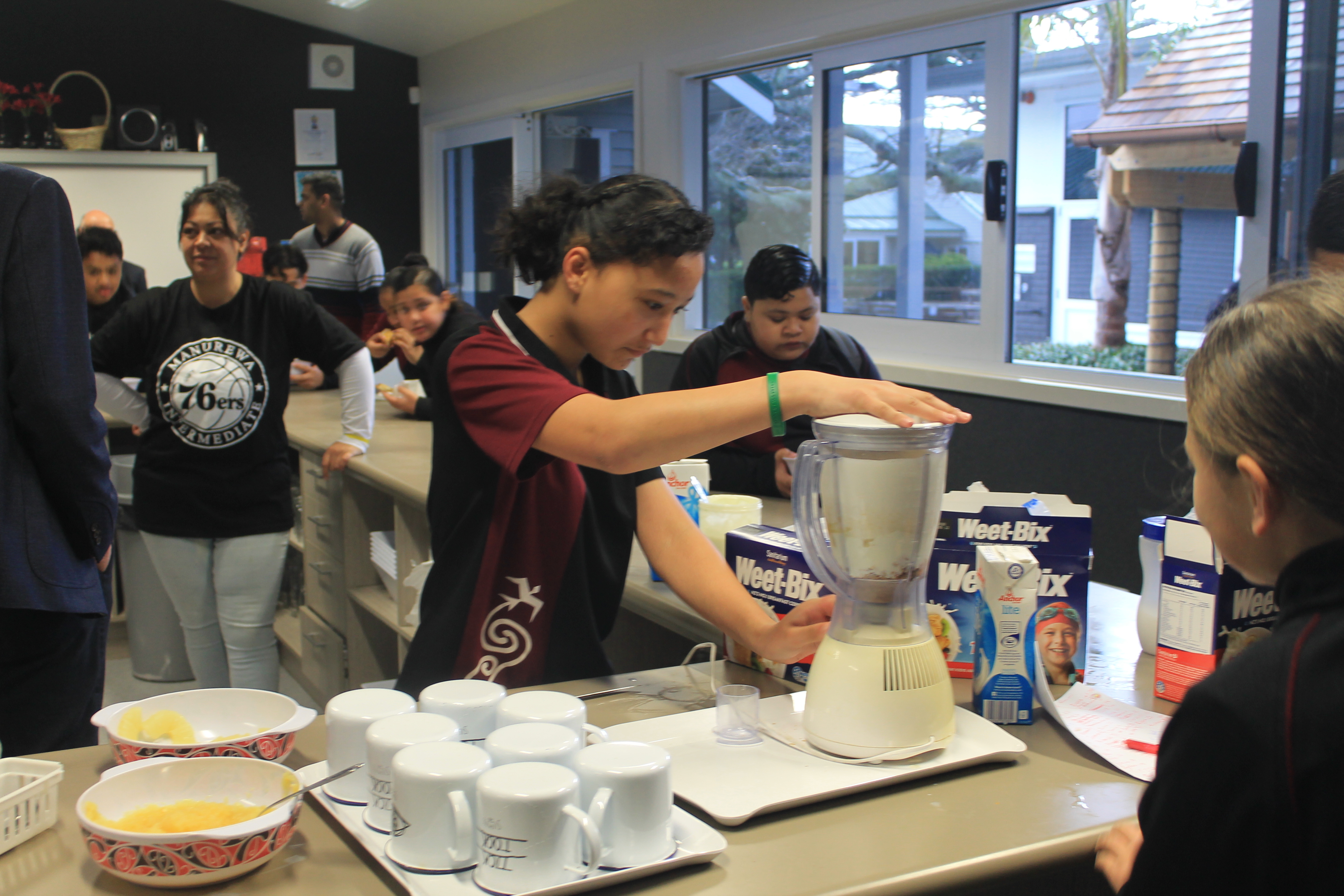
- Sip your breakfast: Some of our KickStart Breakfast schools offer yummy smoothies blending, milk, fruit and Weet-Bix. Check out some of our favourite smoothie combinations in our recipe booklet here
References
*Sincovich A, Sechague Monroy N, Smithers LG, Brushe M, Boulton Z, Rozario T, Gregory T. Breakfast skipping and academic achievement at 8-16 years: a population study in South Australia. Public Health Nutr. 2025 Mar 5;28(1):e28.